Relying on the Web: What Cancer Patients Should Know

When I was first diagnosed with cancer, I entered a psychological realm where wanting to know everything about the disease alternated with fear and aversion. Numb and in shock, I would often read over my three-page pathology report, using various websites to meticulously research the strange and frightening terminology it contained.

I’m not alone in feeling this way or in turning to the Internet for help. Nearly half of all Canadian adults are asking questions about cancer, and most turn first to the web for information. The problem is that this self-research is leaving many cancer patients confused, overwhelmed and stressed out. Although we tend to use the Internet as our first resource, most of us don’t have strong faith in the information that it provides.

IMG_0221

According to a new survey commissioned by the Canadian Cancer Society, when it comes to getting definitive cancer information, doctors and healthcare professionals are trusted by 94 per cent of Canadians. In spite of that only eight per cent of Canadians contacted their healthcare team first with questions. Similarly, cancer organizations and charities are trusted by 87 per cent of those seeking information, but less than five per cent of Canadians searching for cancer information reached out to them. People are more skeptical of online sources with only 69 per cent trusting the information. Despite their uncertainty, 85 per cent of people with cancer questions first turned to a search engine.

Why do Canadians so frequently consult the web for information about cancer if they place more confidence in their oncologist and organizations such as the Canadian Cancer Society? According to the survey, convenience is an issue. While the web is easily accessible, more than half of respondents said it is challenging to get time to speak with their healthcare team. But ease of use comes with unexpected side effects. Two-thirds of Internet users felt overwhelmed with information, and 62 per cent felt stressed out and worried, jumping to 70 per cent among Canadians 18 to 34.

There are several alternatives to randomly searching the web that I would strongly recommend.

Use Only Reliable Internet Sites

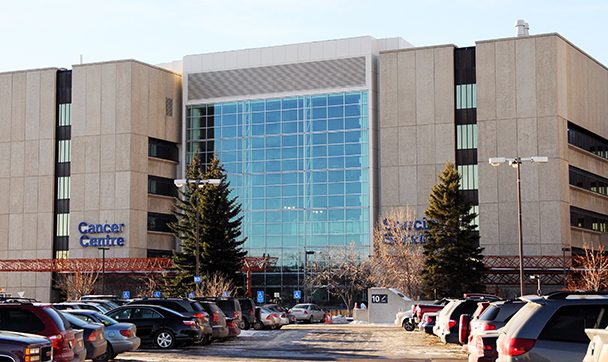
My cancer facility, the Tom Baker Cancer Centre in Calgary, provides patients with a list of recommend websites. Here are a few of the most essential ones.

American Cancer Society
Canadian Cancer Society
National Cancer Institute
CancerNet
Oncolink

Use The Canadian Cancer Society’s Cancer Information Service

IMG_0117Since 1996, the Canadian Cancer Society has answered 1,250,000 questions through its Cancer Information Service. The Society’s toll-free bilingual Cancer Information Service can be reached at 1-888-939-3333. Assistance is available to cancer patients, caregivers, the general public and healthcare professionals. An information specialist will take all the time you need to answer your questions and provide you with information on the following topics:


  • cancer treatment and side effects
  • clinical trials
  • coping with cancer
  • emotional support services
  • prevention
  • help in the community
  • complementary therapies

The Canadian Cancer Society’s phone line is available during business hours Monday to Friday. You should also note that when you contact the Cancer Information Service for help, your privacy is protected and you will not be asked for donations or put on a mailing list.

Access Support Organizations for Your Specific Cancer Type

Instead of randomly searching the Internet try connecting with an organization that specializes in providing support to individuals with your type of cancer. For example, staff in Ovarian Cancer Canada’s regional offices are available to answer your questions and to provide support via telephone or email. Ovarian Cancer Canada hosts webinars, workshops and events that are relevant to women living with the disease. You can also listen to various educational recordings on their YouTube channel.

Finally, Ovarian Cancer Canada offers a comprehensive guide to support and inform women who have been newly diagnosed with ovarian cancer. The publication is called By Your Side and printed copies of this resource are provided free of charge across Canada. You can Order By Your Side by filling out an online form or by calling 1-877-413-7970 (toll free).

Unit 42 Haiku

National Poetry Month, which takes place each April, is a celebration of poetry introduced in 1996. Those of you who follow The Teal Diaries are aware that I don’t normally write poetry, however I’ve been inspired during my cancer treatments to pen a small collection.

There are few experiences in life as distressing or traumatic as being hospitalized for cancer surgery. In December 2011, I underwent surgery and was cared for on Unit 42 at Calgary’s Foothills Hospital. Many of the events that transpired are represented in the poetry that you will read here. In this case I’ve chosen to write haiku—a form that focuses on one brief moment in time, employs colourful imagery, and often provides a sudden moment of illumination.

Blue slippers and gown
An eternity passes
in the pre-op room.

When he cuts me open,
no tumour for my collection,
crave smooth healthy organs.

Anesthesia mask
A few deep breaths are drawn
on my way to oblivion.

Recovery room
The bright lights overhead.
I’m dropped into darkness.

Conscious, I arrive.
The darkness welcomes me
on a winter night.

The room is spinning.
I long for perfect stillness,
let this voyage end.

van-gogh-starry-night

I have nurse Crystal.
The post-surgery hours pass,
finally the dawn.

They manage my pain.
Senses are dulled with morphine,
the standard dosage.

Compression bandage
covers my fresh incision
my surgeon’s trademark.

First blood transfusion
My outstretched arm is waiting
for type O to come.

My blanket is thin.
Comfort of warm flannel sheets
during the still night.

This building is old,
mid-twentieth century,
these rooms are vintage.

Generations past
have walked slowly down these halls
now I follow them.

19th Century Surgery

I have a roommate,
a Dutch Lutheran woman.
Her prognosis is grave.

New complications,
open wound, fluid leaks out,
doctors seem unsure.

Hard recovery
My progress has been so slow,
a mountain each day.

My carcinoma
hides under a microscope
in some nearby lab.

The truth will ooze out.
Why conceal my pathology,
daze me with a pill?

He stops by my room.
Cancer spread to one lymph node.
The truth is laid bare.

Too much of this place.
Even the walls scream go home
find the strength to heal.

Past empty wheelchairs,
through the lobby Christmas Eve
out hospital doors.

It Takes Lady Balls

As an ovarian cancer patient I’ll admit that I often feel overwhelmed by the dismal survival statistics and apparent futility of fighting such a deadly disease. Approximately 2,800 Canadian women are diagnosed with ovarian cancer each year and five women die from the disease every day. Currently, there are more than 17,000 of us in Canada living with the disease. The relative statistics are similar in the United States where 21,000 women will be diagnosed with ovarian cancer this year, and 14,000 will die from it.

Because the symptoms are usually subtle and there is no reliable screening test, ovarian cancer is frequently misdiagnosed or not discovered until it has reached an advanced stage. This makes treatment difficult, which is a key contributor to its high mortality rate. Ovarian cancer has a five-year survival rate of around 46 per cent, compared to nearly 90 per cent for breast cancer.

Each year at the Ovarian Cancer Canada Walk of Hope I’m proud to join a small but dedicated group of teal shirted survivors. Other participants in this key fundraising event wear white shirts— many in attendance at the walk are the husbands, children or grandchildren of those who have recently passed away. Unfortunately, since so many of us diagnosed with ovarian cancer die quickly after our diagnosis, the support network that typically forms around a cancer patient moves on quickly, creating what some have called a “leaky bucket” of advocates for the disease.

ladyballs

I was delighted this January when Ovarian Cancer Canada launched Ladyballs, their boldest and most successful marketing campaign to date. Their marketing team knew that to be successful they would need to create a slogan that could be heard above the din of other national campaigns. So rather than focusing on sad facts to illicit sympathy, the team at Ovarian Cancer Canada chose to focus on the tremendous strength of survivors and the power we all have to do something about women’s most fatal cancer.

Marketing executive and ovarian cancer survivor, Lauren Richards, spearheaded Ladyballs. Richards is a former Cossette Media and Starcom MediaVest Group executive who has operated her own Toronto media consultancy since 2013. She enlisted Canadian broadcasters, newspapers, magazines and online publishers to donate several million dollars worth of space and time for the campaign.

Those behind the promotion knew from the start that they were up against organizations that have become brands in and of themselves. For example, Movember is a brand for prostate cancer and Run for the Cure is an iconic brand in the fight against breast cancer. Knowing they had such low awareness and little money, it was a daunting task.

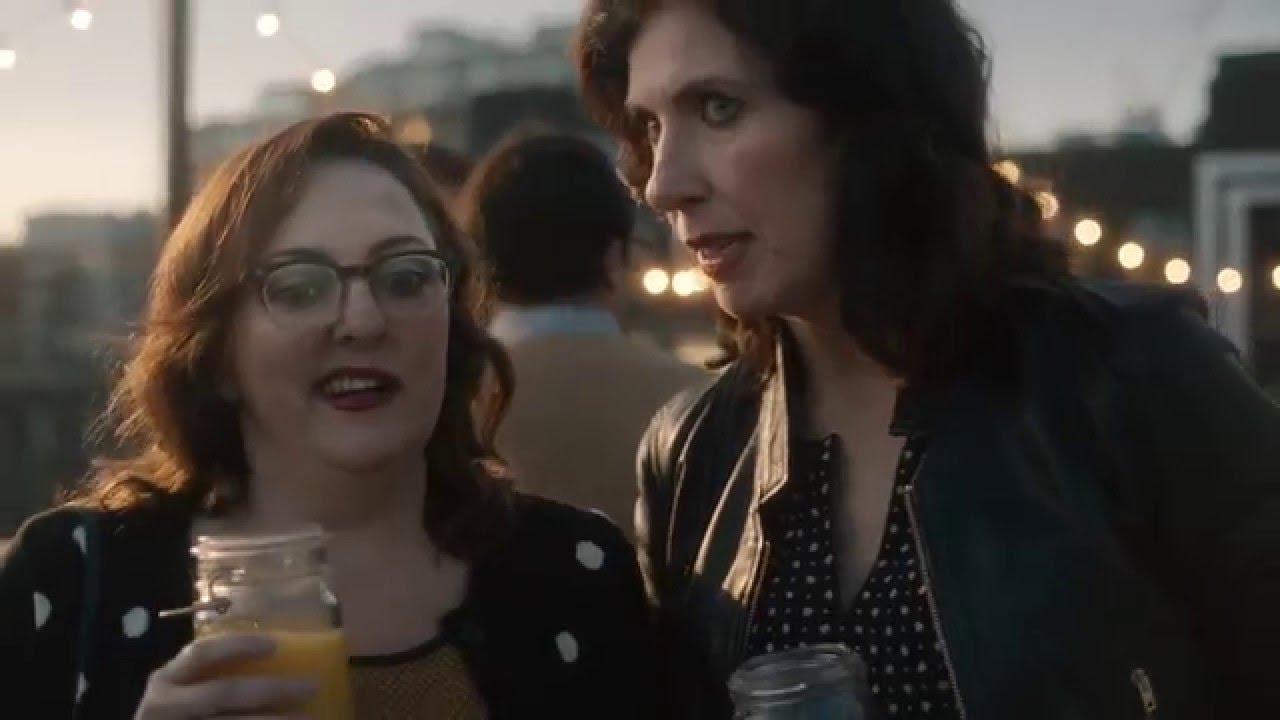
The Ladyballs campaign’s most visible component is a video spot in which women show their so-called “lady balls” by demonstrating chutzpah in the face of pressure or adversity. “Check out the lady balls on her,” one woman says to her co-worker after a female employee disagrees with a male boss’s decision during a meeting. “Look at the lady balls on her,” says a male announcer when another woman goes all-in during a televised poker tournament. In the concluding voiceover an announcer informs viewers that women have balls–their ovaries–and they’re always at risk. Viewers are then directed to donate to the cause at ladyballs.org.

ladyballs2

As expected, the campaign has been highly controversial. Some critics say the ad insults women by comparing a uniquely female body part–the ovaries–to men’s testicles. They say that women don’t have to stoop to that level to promote an informed discussion. However, I personally disagree with this view. I hold the same opinion as Matt Miggins, a nursing student at St. Clair College in Windsor.

“They are not mad five women a day die from this?  I find it ironic that they are mad about words. People should be mad at the fact this is happening to our mothers, sisters and wives,” said Miggins. He said he thinks people should put things into perspective. “People need to ask themselves, if the word balls saves just one life, is it then worth it?”

According to Ovarian Cancer Canada, the campaign has been instrumental in raising awareness. Ladyballs has been responsible for a significant increase in requests for By Your Side, a resource provided to women diagnosed with the disease. It’s also led to a spike in calls to offices across the country, with callers citing the campaign as their reason for reaching out. One woman who heard a Ladyballs radio commercial immediately pledged $100,000 to the organization, and the campaign has garnered approximately $60 million in earned media impressions since its January debut.

Exploring Cancer’s Realm

Illness is the night-side of life, a more onerous citizenship. Everyone who is born holds duel citizenship, in the kingdom of the well and in the kingdom of the sick. Although we all prefer to use only the good passport, sooner or later each of us is obliged, at least for a spell, to identify ourselves as citizens of that other place.

— Susan Sontag

As a cancer survivor I often feel like I’m an outsider trying to fit into the world I once occupied, the world of the healthy and cancer free. My cancer diagnosis has caused me to view the world differently—for example many things that once seemed enormously important have lost significance and become almost trivial. I’ve discovered that physical attractiveness, material possessions and social status all matter less to me now. Not surprisingly, these things frequently seem to fade into irrelevance as I confront a life-threatening illness. The realm of cancer is teeming with complex, and sometimes even existential, topics. Healthy individuals are able to carry on with day-to-day trivialities, but I’ve had to stop in order to reflect on some of the deeper questions that others have the luxury of ignoring. Since being informed that I have cancer I’ve discovered that I can no longer defer life’s existential questions. Why am I here? What is the purpose of my life? Who am I?

susansontag2

Susan Sontag was an American writer and commentator on modern culture. She published essays, novels, and short stories. Sontag explored society’s attitudes toward cancer in her work Illness as Metaphor.

Regrettably, I’ve learned that our society still has misperceptions about chronic illnesses, such as cancer, and that there is still indignity for those of us living with such conditions. This legacy isn’t surprising considering the profound fear, confusion and stigma surrounding cancer for centuries. Until relatively recently the word was hardly spoken in public or said out loud. In 1978 Susan Sontag wrote the classic, and still controversial work, Illness as Metaphor. A breast cancer patient herself when she was authoring the book, Sontag argues that the metaphors and myths surrounding certain illnesses add greatly to the suffering of patients and frequently inhibit them from seeking proper treatment. By demystifying the fantasies surrounding cancer, Sontag strives to show cancer for what it is—just a disease. Cancer, she argues, is not a curse, not a punishment, certainly not an embarrassment, and it is often highly curable if good treatment is followed.

It’s no wonder that some cancer patients still choose to avoid revealing their illness to others. Some don’t want to be viewed differently. They just want to be normal, not defined by the disease. Others may choose to stay silent to protect their privacy and emotional stability. When the news broke last month that musical legend David Bowie had died at the age of 69 after an 18-month battle with cancer, fans around the world expressed not just grief but shock. Despite more than five decades on the world stage, under the glare of a public spotlight, the rock-and-roll icon managed to keep his cancer journey a secret from fans and friends alike, sharing it only with a handful of people in his inner circle.

simulator

Sometimes when people are diagnosed, they receive a lot of advice from friends, family members or others—virtually everyone has known someone with a form of the disease. Often the intentions are good, but the stories can be scary and frequently make a patient feel worse. When a sizeable network of people learned that I had been diagnosed with uterine and ovarian cancer, I received information that was both inappropriate and that increased my anxiety. I was inundated with everything from holistic remedies for cancer to stories about aunt so-and-so’s bowel cancer. Keeping a diagnosis a secret keeps these kinds of opinions away.

Ultimately when my cancer became common knowledge, there was another aspect that I found somewhat unsettling. The moment some neighbours and acquaintances learned about my illness, all of a sudden it wasn’t really about me. To a large extent their focus became trying to make sure that my mother, who was in the role of my caregiver, was okay. She had a reliable network that was concerned about her and that wanted to make certain that she wasn’t becoming too overwhelmed by the situation. I don’t resent the support that was provided to my mom, but at the time I remember being a little envious. It made me more keenly aware that I don’t possess a large number of close friends myself; it also became slightly harder for me to focus on my own emotional issues and needs.

Fresh Hope for a New Year

This is the fifth New Year that I’ve celebrated since my cancer diagnosis, and each one brings with it a mixture of hope, fear and uncertainty. For many cancer survivors watching everyone plan for the future is difficult, it can produce mixed emotions and make the dawn of a new year extremely challenging.

That’s why I’m not going to use this blog to give a lecture about New Year’s resolutions or to suggest that you make elaborate promises to yourself. I realize that living with cancer often renders such gestures trivial and that your life is probably being planned week-by-week or month-by-month. Instead I’ve chosen to share some of my favorite motivational quotations, may these compelling words make the beginning of another year a little less daunting for you and may the theme of infinite hope provide you with strength and inspiration for your cancer journey.


hope-hands


“Remember, hope is a good thing, maybe the best of things, and no good thing ever dies.”

— Stephen King, Rita Hayworth and the Shawshank Redemption


“I took a deep breath and listened to the old brag of my heart; I am, I am, I am.”

— Sylvia Plath, The Bell Jar


“It’s really a wonder that I haven’t dropped all my ideals, because they seem so absurd and impossible to carry out. Yet I keep them, because in spite of everything, I still believe that people are really good at heart. I simply can’t build my hopes on a foundation consisting of confusion, misery and death.”

— Anne Frank, The Diary of a Young Girl


“The best way to not feel hopeless is to get up and do something. Don’t wait for good things to happen to you. If you go out and make some good things happen, you will fill the world with hope, you will fill yourself with hope.”

— Barack Obama


sunrise-hope


Pretty women wonder where my secret lies.
I’m not cute or built to suit a fashion model’s size
But when I start to tell them,
They think I’m telling lies.
I say,
It’s in the reach of my arms
The span of my hips,
The stride of my step,
The curl of my lips.
I’m a woman
Phenomenally.
Phenomenal woman,
That’s me.

— Maya Angelou, Phenomenal Woman


“When you die, it does not mean that you lose to cancer. You beat cancer by how you live, why you live, and in the manner in which you live.”

— Stuart Scott


“I can be changed by what happens to me. But I refuse to be reduced by it.”

— Maya Angelou


“I’m not a dreamer, and I’m not saying this will initiate any kind of definitive answer or cure to cancer, but I believe in miracles. I have to.”

— Terry Fox

Lessons in Survivorship: The Wisdom of Cancer

PurpleRain

As I’ve mentioned before in this blog, self-assessment or the need to reprioritize your life is a virtually inevitable part of being a cancer survivor. This month marks the fourth anniversary of my diagnosis. My gynecologist informed me of my disease on November 3, 2011, and this will always remain one of the most significant days of my life. How can one explain such a profound and life-altering event to a person who has always been relatively healthy? Some psychologists and experts have observed that cancer patients divide their lives into two parts or that we are figuratively born twice.

Since the beginning of my cancer experience there have been moments of epiphany and numerous opportunities for personal reflection. I want to share a few of the survivorship lessons that I’ve come to terms with over the past four years. According to professionals in the cancer field, survivorship is living with and beyond cancer. Survivorship covers the physical, psychosocial, and economic issues of cancer, from diagnosis until the end of life. This is some of what I’ve learned so far.

If something isn’t going to matter or have any impact five years from now, I probably shouldn’t spend time worrying about the issue. Not until my diagnosis with cancer did I realize how much time I spend worrying about the future or regretting the past. I believe more than ever in the importance of focusing my attention on the present. I can live each moment only once, so why waste that precious moment in a state of self-induced stress or anxiety? As for the direction of my life, I’ve ultimately gained a clearer perspective about what my priorities are—I’m proud of my ability to concentrate on the values and relationships that I know are the most significant.

I tend to enjoy my own company more than I enjoy being in groups or socializing with other people. I’ve accepted that I’m an introvert and there’s nothing wrong with the way I am, it’s not necessary for me to apologize. I lament the fact that my personality type is so frequently misunderstood and that introversion is often confused with being shy. Shyness is the fear of negative judgment, and introversion is a preference for quiet, minimally stimulating environments. I become the most upset when I’m accused of disliking people in general and of lacking the skills to be an extrovert. The truth is that introverts comprise at least one quarter of the population and we continue to make our own unique contributions to society.

istock_000007951394medium

It’s counterproductive to surround myself with people who don’t want to be with me or don’t value me. I’ve reached a point on my cancer journey where I find it’s no longer necessary to impress anyone. If they like me the way I am, that’s fine. If they don’t, it’s their loss.

I’ve definitely developed zero tolerance for having toxic people in my life.

Some Signs of a Toxic Person

Nothing you can say or do is good enough.
They comment on the smallest flaw or perceived imperfection.
They drag up your past and won’t allow you to grow or be different.
They act like they are fabulous and never make mistakes.
They leave you feeling guilty and ashamed of who you are.
They are critical, controlling and don’t think about your needs.
They leave you feeling beaten, wounded, battered bruised and torn.
They violate your boundaries and never respect no.
They don’t care about your feelings and they like to see you suffer.
It’s always about them and what they think and want and feel.

I rarely use the word someday and I try to avoid talking about future plans in vague or uncertain terms. Most people I know take the future for granted and think of it as something that will always be there for them. In 2012 I spent over a month and a half on Unit 42 at Calgary’s Foothills Hospital. This women’s cancer ward is predominately a place of bravery, triumph, heartbreak and tears. When I looked into some of the other patients’ eyes, I could see them begging for a future, and I understood that they would do almost anything for the gift of just a few more months in this world. As a cancer survivor I’ve discovered how precarious tomorrow really is and that you can’t always depend on someday.

50eb27d44683b9c588386c68616f

I’ve learned it’s not wrong to put my own needs first and that it’s essential to take care of myself physically and emotionally. After undergoing five cycles of chemotherapy and three cancer surgeries within eight months—I’m finally treating my body with the respect it deserves. We’re all pressured daily to move faster, do more, sleep less, earn more money and obtain that promotion. Within the cancer community, I hear the term “self-care” a lot. I don’t know if I’m fond of the expression, but it’s a concept I believe in strongly, I consider it particularly relevant for women with cancer. As women we are socially encouraged to give everyone else our time, energy and attention—but often feel conflicted or guilty when we stop long enough to take equally thoughtful care of ourselves.

Five Ovarian Cancer Myths

One of the most disturbing issues for me as an ovarian cancer survivor is the lack of awareness and misinformation that persists. Only with a thorough and proper understanding can women protect themselves from this devastating, and often fatal illness. I admit that before my personal diagnosis a few years ago my own knowledge concerning ovarian cancer was quite limited. In this post I’ll examine several of the most commonly held falsehoods or misunderstandings about ovarian cancer, but first some basic details.

Ovaries are two small almond-shaped organs located on each side of the uterus that store eggs or germ cells. Ovarian cancer is a disease in which malignant (cancerous) cells are found in one or both ovaries. Thousands of women are living with ovarian cancer in Canada. It’s estimated that this year 2,800 Canadian women will be newly diagnosed with this disease. Ovarian cancer is the fifth most common cancer for women and is the most serious women’s cancer.

clh-tom-baker

Myth 1: Many people believe that there is a screening test for ovarian cancer or the related myth that a Pap test detects ovarian cancer.

Fact: According to research more than half of women think a Pap test will detect ovarian cancer. Actually the cervical smear is designed to detect precancerous changes to the cervix, and it does not detect ovarian cancer. You may be familiar with the CA-125 test, it’s used on women who have ovarian cancer or who are at high risk of developing the disease. Unfortunately according to the majority of experts, the CA-125 test is proven to be ineffective in diagnosing ovarian cancer. This blood test is used mainly as a guideline for oncologists during treatment of ovarian cancer because CA-125 (a sugar-associated protein found in the blood) often goes down if the treatment is working. However, the test is not reliable for diagnosing ovarian cancer. Researchers continue to look for a dependable screening test, but currently there is none.

Myth 2: There is often a false assumption that women who have had multiple sexual partners are at a greater risk of developing ovarian cancer or that the HPV vaccine can help prevent it.

Fact: Some women mistakenly believe that the number of sexual partners they may have had, or the age at which they became sexually active, has some bearing on their chances of developing ovarian cancer. This is incorrect. The spread of the HPV virus, which can lead to cervical cancer, is associated with sexual activity, but is not connected in any way to ovarian cancer. The HPV vaccine will help to reduce the risk of cervical cancer, but not ovarian cancer.

OvarianCancerPain

Myth 3: Many women become convinced that an ovarian cancer diagnosis is always fatal and they won’t survive.

Fact: A diagnosis of ovarian cancer is extremely serious, but it’s not invariably fatal. Combing data collected on thousands of California ovarian cancer patients, UC Davis researchers recently determined that almost one-third survived at least 10 years after diagnosis. The unprecedented findings upend the notion that women diagnosed with cancer of the ovary always face a poor chance of survival. Indeed, while the study confirmed earlier findings about characteristics associated with ovarian cancer survival (younger age, earlier stage and lower grade tumors at diagnosis) it also identified a surprising number of long-term survivors who didn’t meet those criteria.

Myth 4: It’s common to believe that if you don’t have a family history of ovarian cancer you are not at risk of getting the disease.

Fact: Only about 10 to 15 per cent of women diagnosed with ovarian cancer have a family history of this disease. Complex variables and numerous risk factors beyond genetics are usually involved and the exact reason a woman develops ovarian cancer often remains unknown.

Myth 5: Many people think that there are no early symptoms or warning signs of ovarian cancer.

Fact: It’s a widely held belief that ovarian cancer is a “silent killer” with symptoms only presenting in the later stages of the disease, even some doctors consider this to be a medical fact. However, there is now clear evidence that most women who are diagnosed with early stage disease do experience symptoms. The problem is that women often delay seeking advice about their symptoms, and their GPs often don’t immediately think ovarian cancer may be a possibility. A lot of women experience considerable delays in receiving their diagnosis and ovarian cancer is usually detected at stage 3 or 4.

How to Slay the Dragon: Fear, Anxiety and Cancer

guilt

Fear is one of my constant companions on this cancer journey, for nearly four years now it has attempted to overcome me and prevent me from living the life I want. Naturally, when I was first diagnosed with ovarian cancer and saw my pathology report a series of unsettling questions raced through my mind. Consulting with a team of oncologists at Calgary’s Baker Centre only seemed to increase my anxiety over my condition. Will the recommended treatment be successful or will I die? Will undergoing another major surgery followed by chemotherapy be too agonizing and unbearable? Now that my oncologist has informed me that I’m in remission, it’s the fear of my cancer recurring that I have to cope with on a daily basis.

In this post I’d like to share several of the best techniques that I’ve discovered for cancer survivors to master their fear and not let it control them.

Remember That Your Journey is Unique

Most women with ovarian cancer have at least one relapse within five years of being diagnosed, but I frequently remind myself that this standard rate of recurrence won’t necessary happen to me. The reality is that medical science has established that all cancer patients are unique. What’s more, because cancer statistics are based on large samples of people, they cannot be used to predict exactly what will happen to a single individual. Everyone is different. Treatments and how people respond to treatment can differ greatly. I strongly suggest trying to follow these essential rules:

  1. Resist the temptation to compare the disease in your body to what is happening to other people, even in situations when the type or stage of cancer is highly similar.
  2. Don’t dwell on statistics or the possibility of recurrence.

Practice Mindfulness

I’ve discovered that one of the best ways to quiet my mind and focus my attention is a technique called mindfulness. Jon Kabat-Zinn pioneered using this method with cancer patients and other groups battling chronic pain or illness at the University of Massachusetts Medical School. Mindfulness is basically just a way of paying attention, a way of awakening our minds and being present in the here and now. With principles found in Buddhism, mindfulness teaches us to live moments in each day rather than focusing on what might lie ahead.

Acceptance and letting go are crucial components of mindfulness. A philosophy of mindfulness encourages us to come to terms with our life, even difficult experiences such as a cancer diagnosis. Acceptance means seeing things as they actually are in the present. Mindfulness doesn’t require that you have to like your situation—you don’t necessarily have to assume a passive attitude toward suffering or life’s unfairness. However, you must come to terms with things as they are and acknowledge them, whether it’s a diagnosis of cancer or the possibility of its recurrence in the future.

Appreciate the Joys of Nature

K-Country

It’s generally agreed that exposure to nature is extremely beneficial for people with cancer or other chronic illnesses, improving mood and easing anxiety, stress, and depression. Current research findings suggest that natural settings such as parks, wilderness areas, urban green spaces and gardens have the potential to improve both physical and mental health. Numerous health scholars claim that ecotherapy can promote wellness and healing. The practice is also known as green therapy, nature therapy, and earth-centered therapy.

Take Part in Exercise or Physical Activity

Studies have proven the benefits of exercise for cancer patients. Of course, vigorous physical activity might not be possible during treatment and you should always consult with your doctor before beginning an exercise program. It will take more effort to become active if you were accustomed to a sedentary lifestyle before your cancer diagnosis. Many people feel so excited about “getting healthy” that they try to do multiple things at once, and that’s a recipe for burnout. Try focusing on just one type of exercise first. Some research indicates that a behavior change is more likely to ensue when you’ve identified what you really want from it. You may be seeking better moods or stress relief, or maybe you just want to connect with a fellow cancer survivor or workout buddy—it doesn’t matter, as long as you know what your goals are.

Have at Least One Regular Hobby

Secret-Garden

There’s an emerging group of professionals who employ the arts to help people heal. The new field is called creative arts therapies, and it encompasses a wide range of modes of expression including art, dance/movement, drama, music and poetry. When cancer patients undertake these activities, whether individually or with the guidance of a creative art therapist, they stand to benefit psychologically and emotionally. Recently there’s been a trend toward simple or old-fashioned crafts and hobbies such as knitting. Some adults are even using colouring books to relax and reduce daily stress. This concept started several years ago with the publication of Johanna Basford’s Secret Garden. Her colouring book for adults has since been translated into 14 languages and has sold over one million copies.

The Single Life

Wedding ringsLife is challenging enough for anyone facing cancer, but studies have revealed that cancer patients who are unmarried sometimes have unique disadvantages. As a single woman I have to agree that my battle with ovarian cancer has been influenced by the fact that I don’t have a life partner. Fortunately, I have family members who have served as caregivers during my chemotherapy treatments and following surgery, but I admit that I envy the majority of women who are married or in a long-term relationship. If they must undergo a cancer journey they can rely on the day-to-day physical, emotional and financial support of their spouse. There were instances in the hospital when I felt a little forsaken as I watched other women receive visits from their husbands and children. I also remember cringing a bit whenever a staff member would assume I was married, often referring to me as Mrs. Chartier rather than using the appropriate Miss. or Ms. before my name.

A 2013 study, in the Journal of Clinical Oncology, confirmed that cancer patients with a supportive spouse tend to fare considerably better than those who are on their own. The protective effect of marriage, as shown in this study, is almost shocking. Researchers from major U.S. cancer centres analyzed the records of 734,889 patients diagnosed with one of the 10 most common and fatal forms of cancer, from 2004-08. (These included lung, colorectal, breast and non-Hodgkin lymphoma.) After controlling for variables like age, sex, race, household income and education, they found that single people were 17 per cent more likely to be diagnosed with metastatic cancer, which had spread to other parts of the body, and were 53 per cent less likely to get the best treatment. Paul Nguyen, the study’s senior author, also revealed that patients who were married tended to live 20 per cent longer than those who were single, divorced, or widowed. The team concluded that the benefits of a happy marriage are comparable to—or better than—chemotherapy.

uterine-cancer2One interpretation of the findings is that if you’re married you’ve got a live-in advocate to pressure you to get to appointments — both screenings for earlier diagnosis and to cancer-fighting therapies after the disease has been diagnosed. It’s suspected that social support from spouses is also what’s driving the striking improvement in survival. Spouses often accompany patients on their visits and make sure they understand the recommendations and complete all their treatments, but there’s more to cancer survival than office visits. There are many additional factors that are influenced by the kinds of social support one has. It’s possible that the social support marriage provides helps stave off depression and stress, both of which have well documented negative effects on health and the immune system. Ultimately, the study results don’t imply that marriage is the only way to reap the rewards of social connections — presumably any tight-knit social network can provide the same kinds of mental and physical health benefits.

While my personal cancer journey continues to be shaped by the fact that I’m single, there are many other variables that influence me physically and psychologically. Most importantly, lacking the support of a spouse doesn’t necessary mean that my prognosis for survival is worse. My advice to other single cancer patients is to tap into your support network — this network likely includes parents, siblings and friends. Support for cancer survivors also consists of non-profit organizations, volunteers and the community at large. For example, if simply getting to treatment is a difficult task for you the Canadian Cancer Society offers help. Their Volunteer Driver Program strives to provide access to safe and reliable transportation for people who are receiving active treatment at approved cancer treatment facilities. This is an invaluable service, especially if you’re also dealing with physical or financial challenges or if the treatment centre is far from home.

Time Heals: Today’s Cancer Patients Owe a Debt of Gratitude to Generations Past

Emperor-of-All-MaladiesOnly recently have I started to think a great deal about the history of cancer or the oncologists and patients that have come before me. I developed a fascination with these topics while watching the PBS miniseries Cancer: The Emperor of All Maladies. This three part series skillfully explores the medical and scientific aspects of cancer; even more impressive is the wonderful job that the producers have done of delving into its history and politics.

The creators of the groundbreaking television documentary based their project on a strong work of non-fiction by renowned oncologist and award winning journalist Siddhartha Mukherjee. Both the PBS documentary and Mukherjee’s Pulitzer Prize winning volume have one overriding theme. They bring to light that our current generation’s experience with cancer represents only a momentary chapter in an epic battle spanning thousands of years.

The Emergence of Modern Cancer Surgery

When I was diagnosed with fairly advanced cancer in my uterus and right ovary, the first, and most essential, part of my medical treatment involved surgery. I literally owe my life to the skill of my pelvic cancer surgeons and to the sophisticated surgical techniques available in the 21st century. Ovarian cancer is still the most serious of all women’s cancers, and the survival rates can be quite grim—the positive news is that the outlook has improved in recent decades, largely due to better surgical procedures.

For centuries surgery to remove cancerous tumours wasn’t a viable option, as the medical technology wasn’t yet available. In extremely rare cases a physician would attempt to cut out a cancerous growth. However, the circumstances would have been barbaric by today’s standards. There was no method to properly anesthetize patients and they were frequently operated on while conscious, in addition there was no use of modern antiseptics to keep the surgical wounds from becoming infected.

19th Century Surgery

The late 19th century witnessed the origins of present-day cancer surgery. Anesthetics such as either were discovered and this made lengthier, more complex operations possible. Procedures such as the radical mastectomy for breast cancer were successfully devised and implemented during this era. As a matter of fact, the medical community firmly believed that it was possible to cure cancer through surgery alone. The nature of how cancer spreads to distant sites in the body wasn’t yet well understood. Most experts mistakenly believed that its recurrence months or years after surgery was strictly due to not taking out enough tissue, reappearance of the disease was caused by the growth of fragments of the principle tumour that were left behind.

The Development of Chemotherapy

Sidney Farber

Dr. Sidney Farber

The nature of metastasis is much better understood today and a patient with gynecological cancer, such as myself, is routinely offered chemotherapy following surgery. Of course only in the past 40 or 50 years have powerful chemotherapy drugs been introduced to the arsenal in the war against cancer. Oncologist Sidney Farber (1903-1973) is considered by most historians to be the father of chemotherapy. Farber and his team in Boston began trials on children with leukemia in the late 1940s. At this time leukemia was still a death sentence for any child diagnosed with the disease.

Farber’s new therapy was almost miraculous in the sense that it led to remission in many of his young patients. Some of the children, including a patient named Robert Sandler, had their lives extended by months after the potent chemicals were administered to them. The leukemia would virtually disappear and they would momentarily resume an active childhood. Throughout the 1950s and 60s, Farber continued to make advances in cancer research, notably the 1955 discovery that the antibiotic actinomycin D and radiation therapy could produce remission in Wilms’ tumor, a pediatric cancer of the kidneys.

What the Future Holds

As I battle ovarian cancer I try to be realistic about how far treatment has come, I know there is still an extremely long way to go in the war against this insidious disease. Over the last two decades, the five-year survival rate for patients with ovarian cancer has improved significantly. Yet, according to the experts, no more than 30 per cent of long-term ovarian cancers are currently being cured. Oncologists admit that they are facing enormous challenges. While surgical advances and new treatment approvals, including Lynparza (olaparib) and Avastin (bevacizumab), have improved the outlook for ovarian cancer patients, late diagnosis and tumour resistance remain as the two most significant barriers in overcoming the disease.

Cancer Cells

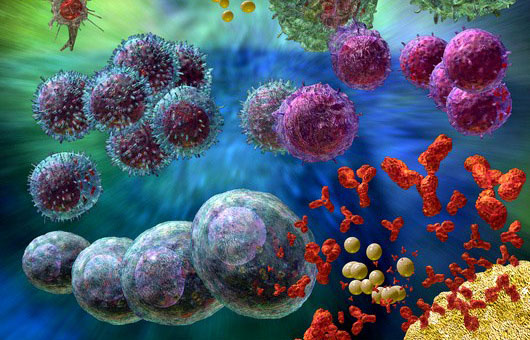
Meanwhile, the medical community is continuously developing new treatments for cancer, one of the most promising is called immunotherapy. For decades oncologists have known that the immune system plays an important role in certain types of cancer. They noted that there were rare spontaneous remissions of cancer without treatment and they suspected that this was because the immune system was attacking the tumour. Immunotherapy is designed to boost the body’s natural defenses to fight the cancer. Medical specialists use materials either made by the body or in a laboratory to improve, target, or restore immune system function.

At the present time it isn’t entirely clear how immunotherapy works against cancer, it may function by stopping or slowing the growth of cancer cells, stopping cancer from spreading to other parts of the body, or helping the immune system increase its effectiveness at eliminating cancer cells. There are currently several types of immunotherapy in use, including monoclonal antibodies, non-specific immunotherapies, and cancer vaccines.