Living With the Risk of Recurrence

For me personally, the greatest stress of living with cancer has involved making difficult medical decisions regarding my course of treatment. There is also the constant pressure of waiting for outcomes that I cannot completely control. When I was diagnosed with endometrial and ovarian cancer in late 2011, I was referred to the Tom Baker Cancer Centre where my case was reviewed by the Gynecologic Oncology Tumour Board. This team of doctors and specialized pathologists reviews all new referrals to ensure correct diagnosis and to recommend the best treatment plan. Almost instantly I became the patient of one of Western Canada’s most renowned pelvic cancer surgeons, Dr. Prafull Ghatage. I’ll never forget our first encounter with Dr. Ghatage, as my mother and I sat in stunned silence, he calmly explained that I required surgery as soon as possible. This news was overwhelming, especially since I had just undergone a total abdominal hysterectomy performed by my gynecologist. “I just had a hysterectomy and now I’m dying of cancer,” I tearfully blurted out. “You’re not dying, I’ll inform you if you are dying,” a voice immediately responded. These rational words jolted me back to reality, and before we left I signed a consent form for a laparotomy—a specialized procedure in which abdominal organs are removed, biopsied or repaired and a definitive diagnosis can be made.

That first meeting with Dr. Ghatage now seems like a lifetime ago. In a few weeks I’m scheduled for another routine checkup at the cancer centre. It’s essential that I be monitored regularly for a possible recurrence or any signs of malignancy—ovarian cancer has a notoriously high recurrence rate. Many women with the disease face at least one recurrence within five years of their first diagnoses. Since my cancer is considered to be fairly advanced, the standard course of treatment that was recommended included a month and a half of radiation therapy. Originally over twenty rounds of external beam radiation were advised and were to follow my cycles of chemotherapy. My understanding is that following through with this proposal might have reduced my odds of recurrence to as low as five or 10 per cent.

Last fall I made the excruciatingly difficult decision to forego treatment with radiation, opting for observation instead. The risks of pelvic radiation include the possibility of rectal bleeding—in addition some patients will experience a bowel blockage or a permanent change in bowel habits after their treatments are finished. In some cases undergoing radiation can result in bowel or bladder damage serious enough to be permanent or to require surgical intervention to correct. For most cancer patients the benefits outweigh these serious risks, which are comparatively small. But due to my personal medical history it’s almost certain that radiation would have posed a substantial danger. The radiation oncologist informed me that due to my previous bowel blockage the possibility of acute complications occurring would be much higher than average. Besides, I was undeniably exhausted from three consecutive abdominal surgeries in addition to five cycles of Carboplatin, at the time I felt I could endure little more.

simulator

As I await my appointment on May 23, the encouraging news is that I’m currently in remission—at least I am to my knowledge—and my chances of a complete cure are better the longer I remain in this state. The Canadian Cancer Society defines remission as a decrease in or disappearance of signs and symptoms of cancer. In partial remission, some, but not all, signs and symptoms of cancer have disappeared. In complete remission, all signs and symptoms of cancer have disappeared, although cancer still may be in the body. According to Ovarian Cancer Canada, 80 per cent of women diagnosed with ovarian cancer will achieve remission. However, it is unknown if the cancer will come back or how long before it comes back. These unanswered questions linger in every woman‘s mind. In the meantime, I’ve made my health my primary focus—a nutritious diet, an appropriate exercise routine and getting enough sleep have never been more important. Obviously I’m careful to take my daily medication; I’ve been prescribed the drug Megace (generic name megestrol), it has been known to reduce recurrence rates in uterine, ovarian and breast cancer patients. Finally, hope and my steadfast determination to live each moment of my life fully and completely remain my allies in this dreadful waiting game.

50eb27d44683b9c588386c68616f

God Bless the Child

When I go to appointments at the cancer centre I notice that I’m surrounded by women in my own fortysomething age range. However, many of them are not patients themselves, they are there as caregivers and are accompanying a cancer stricken elderly parent. Sometimes as I walk in with my support person, my healthy and totally independent 72-year-old mother, I feel bitter and confused at our obvious role reversal. All at once I’m aware of how much the relationships in my life have changed since my diagnosis. Cancer has made me more dependent on family members, a multitude of health care workers and a number of government agencies. Throughout my ordeal there have been lonely days when I’ve yearned for a larger family or an abundance of close friends. Above all having a chronic illness has shown me what it’s truly like to be forced to rely on other individuals and revealed to me who is willing to stand by me in my time of greatest need.

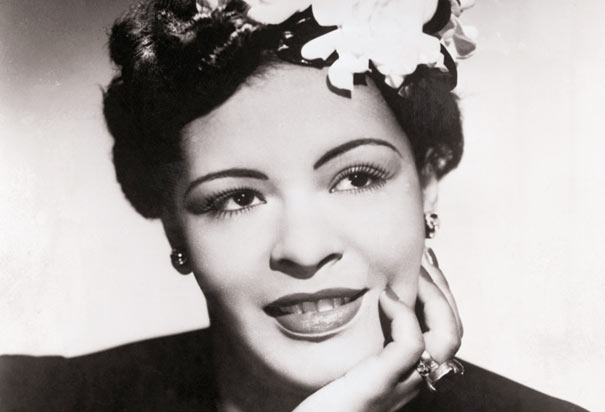
Sometimes music helps me to deal with certain emotions that I’m feeling. Well before I was diagnosed with cancer or felt its harsh social and financial impact, God Bless the Child by the legendary Billie Holiday was one of my favorite songs. But lately both the powerful lyrics and her exquisite delivery keep going through my mind. God Bless the Child extols self-reliance while it condemns those who ignore us, repudiate us or treat us as inferior when we are unable to be self-sufficient. In her autobiography Lady Sings the Blues Holiday indicated an argument with her mother over money led to the song. Apparently during the argument she said the line “God bless the child that’s got his own.” Anger over the incident led her to turn that line into a starting point for a song, which she worked out in conjunction with Arthur Herzog. In his 1990 book Jazz Singing, Will Friedwald describes the work as “sacred and profane” as it references the Bible while indicating that religion seems to have little or no effect in making people treat each other better. Sadly, Billie Holiday was only 44 when she died—she had fought a long, terrible battle with alcohol and drug addiction.

God Bless the Child

Billie Holiday and Arthur Herzog Jr.

Them that’s got shall get
Them that’s not shall lose
So the Bible said and it still is news
Mama may have, Papa may have
But God bless the child that’s got his own
That’s got his own

Yes, the strong gets more
While the weak ones fade
Empty pockets don’t ever make the grade
Mama may have, Papa may have
But God bless the child that’s got his own
That’s got his own

Money, you’ve got lots of friends
Crowding round the door
When you’re gone, spending ends
They don’t come no more
Rich relations give
Crust of bread and such
You can help yourself
But don’t take too much
Mama may have, Papa may have
But God bless the child that’s got his own
That’s got his own

Mama may have, Papa may have
But God bless the child that’s got his own
That’s got his own
He just worry ’bout nothin’
Cause he’s got his own

Image

Billie Holiday

Survivorship 101

My health had always been tremendously good, and then one afternoon in November 2011 I received an unexpected diagnosis of both uterine and ovarian cancer. In hindsight words such as devastating, terrifying, and life-altering seem inadequate to describe the magnitude of that experience—my daily existence was shattered. Sometimes it’s still as if I’m trapped in an appalling dream, a nightmarish reality that to date has encompassed three major abdominal surgeries and five cycles of chemotherapy. As with countless other cancer survivors I have asked “Why me?” while I’ve struggled to find anything positive about living with such an affliction. I have accepted the likelihood that my life may never be exactly the same; I must adjust to a “new normal” as day by day I contend with the consequences of an insidious, spiteful, and often fatal disease.

In this blog I will be writing about various aspects of my cancer journey. I have chosen to call it The Teal Diaries, since teal is the colour used to represent awareness of gynecological cancers. While pink ribbons are strongly associated with breast cancer, significantly fewer people realize that ovarian cancer survivors, and those who wish to support them, wear teal ribbons. If there is less public awareness regarding ovarian and endometrial  cancer, I suspect that it’s because they are both less prevalent and have a significantly higher mortality rate than breast cancer.

I’ve waged my relentless battle for over a year now, I currently seem to have the upper hand and my doctors indicate that they are cautiously optimistic regarding my prognosis. Since the beginning of my cancer experience there have been moments of epiphany and numerous opportunities for personal reflection. Being that this is my initial blog post, I want to share a few of the survivorship lessons that I’ve experienced over the past fourteen months. According to professionals in the cancer field, survivorship is living with and beyond cancer. Survivorship covers the physical, psychosocial, and economic issues of cancer, from diagnosis until the end of life. This is what I’ve learned so far.

You never know how strong you are until being strong is the only option you have left.

I certainly don’t aspire to become a legend like  Terry Fox or to be anything resembling a saint or a cancer hero. But still, I’ve discovered inner qualities and personal strengths I never appreciated or properly acknowledged in myself. Subjected to the ultimate test, I’ve sometimes shocked myself with my capacity to overcome adversity and to confront physical pain and suffering. As one of the approximately 17,000 Canadian women living with ovarian cancer, I obviously know firsthand how it impacts a life. For survivors there is tremendous emotional pressure, along with social and financial turmoil.

There are moments when you have the impression that your world is spinning violently out of control. The fundamental paradox is that I’m often able to feel a sense of power, combined with courage and self-assurance. It’s as if I’m standing in life’s Category 5 hurricane and remaining resolute, steadfast and unbroken. “Okay cancer, you ruthless bastard, attack me with all the intensity you’ve got! I will still transcend you and the pure malevolence that you represent,” I sometimes tell myself. Some pundits would consider this type of resolve impressive, especially as demonstrated by a socially introverted, physically petite woman, such as myself.

Appreciate the flowers in your own backyard.

DSC_0023

I reached an unparalleled low physically and emotionally last year, during the spring of 2012. By May there were potentially life-threatening complications due to my rigorous cancer treatments. Vomiting and in pain, I was transported to the emergency room through early rush hour traffic. It was a bright May morning when I entered the doors of Calgary’s largest medical centre and was admitted suffering from a bowel blockage. I acknowledge that at first I literally wanted to die rather than face what was happening. Nothing had prepared me for the invasive medical procedures that I would endure in the coming weeks or for the length of my hospitalization.

Forty-eight agonizing days elapsed, during which time I received virtually all of my nutrition through a peripherally inserted central catheter (PICC or PIC line). On June 18, 2012, intestinal surgery was skillfully performed. When I awoke in the recovery room I sensed that my crisis was at last resolved. Although only half-conscious, I was filled with elation as they informed me that the procedure to correct my obstruction had been successful. The primary cause was established to be scar tissue from my previous operations and now my digestive system was expected to function normally again. Most of all, I was comforted and reassured by the fact that my cancer had not visibly metastasized to other regions of my body.

My discharge from the hospital ultimately took place on a balmy summer afternoon; the clothes I had worn nearly two months earlier felt hot and loose fitting. I was so weak from my ordeal that I struggled to walk just 10 or 20 metres, but I was in awe as I observed how the seasons had changed and nearly everything had been transformed. I can still remember the blissful journey home and my sense of anticipation during that short, but very emancipating, commute. Even the air filling my lungs was like a breath of freedom.

Upon arriving at the small bungalow where I live, something magical occurred. My eyes surveyed the backyard and the unexpected sight of poppies in full bloom completely overwhelmed me. It was as if I were seeing them for the first time. I remain inspired by their exquisiteness, vaguely encouraged by the realization that their brilliant orange petals and intricately designed purple centres will never appear ordinary to me again. I’m certain that from now on, I’ll be eagerly awaiting the phenomenal appearance of the poppies each June!

Learn how to embrace the new pretty.

There are literally thousands of magazine articles, journal studies and online resources devoted to the topic of sexuality and women’s cancers. How a woman copes and deals with the changes to her body are unique for each survivor, of course such factors as age and relationship status come into play. Studies have confirmed that the most prevalent issue for those diagnosed with uterine or ovarian cancer is a sense of profound loss. Psychologically I continue to mourn the demise of my reproductive organs and the loss of what I always perceived as an impeccably strong and healthy body.

Throughout my cancer ordeal I have felt moments of contempt, occasionally mixed with rage. I find it easy to despise a culture that is inclined to objectify women—placing intense pressure on us to possess a perfect body. I’ve become acutely sensitive to the media, the advertising industry and to what I believe are ridiculous and superficial standards of female beauty.

Belly Pic

There have been circumstances when I’ve waged war using humour or an “in your face” attitude. During my convalescence from one of my cancer surgeries I recall being engaged in a discussion with my mother while sorting through a stack of mail. I paused as I unearthed a catalogue for a major Canadian department store, cringing at the sight of the cover. Predictably it was flaunting an image of a model with an unblemished face and body. The New Pretty, the caption breathlessly announced. All of a sudden I grinned mischievously, as in one defiant move I turned and flashed my scarred and stapled abdomen. “I’ll show them the new pretty,” I boldly declared.