Relying on the Web: What Cancer Patients Should Know

When I was first diagnosed with cancer, I entered a psychological realm where wanting to know everything about the disease alternated with fear and aversion. Numb and in shock, I would often read over my three-page pathology report, using various websites to meticulously research the strange and frightening terminology it contained.

I’m not alone in feeling this way or in turning to the Internet for help. Nearly half of all Canadian adults are asking questions about cancer, and most turn first to the web for information. The problem is that this self-research is leaving many cancer patients confused, overwhelmed and stressed out. Although we tend to use the Internet as our first resource, most of us don’t have strong faith in the information that it provides.

IMG_0221

According to a new survey commissioned by the Canadian Cancer Society, when it comes to getting definitive cancer information, doctors and healthcare professionals are trusted by 94 per cent of Canadians. In spite of that only eight per cent of Canadians contacted their healthcare team first with questions. Similarly, cancer organizations and charities are trusted by 87 per cent of those seeking information, but less than five per cent of Canadians searching for cancer information reached out to them. People are more skeptical of online sources with only 69 per cent trusting the information. Despite their uncertainty, 85 per cent of people with cancer questions first turned to a search engine.

Why do Canadians so frequently consult the web for information about cancer if they place more confidence in their oncologist and organizations such as the Canadian Cancer Society? According to the survey, convenience is an issue. While the web is easily accessible, more than half of respondents said it is challenging to get time to speak with their healthcare team. But ease of use comes with unexpected side effects. Two-thirds of Internet users felt overwhelmed with information, and 62 per cent felt stressed out and worried, jumping to 70 per cent among Canadians 18 to 34.

There are several alternatives to randomly searching the web that I would strongly recommend.

Use Only Reliable Internet Sites

My cancer facility, the Tom Baker Cancer Centre in Calgary, provides patients with a list of recommend websites. Here are a few of the most essential ones.

American Cancer Society
Canadian Cancer Society
National Cancer Institute
CancerNet
Oncolink

Use The Canadian Cancer Society’s Cancer Information Service

IMG_0117Since 1996, the Canadian Cancer Society has answered 1,250,000 questions through its Cancer Information Service. The Society’s toll-free bilingual Cancer Information Service can be reached at 1-888-939-3333. Assistance is available to cancer patients, caregivers, the general public and healthcare professionals. An information specialist will take all the time you need to answer your questions and provide you with information on the following topics:

  • cancer treatment and side effects
  • clinical trials
  • coping with cancer
  • emotional support services
  • prevention
  • help in the community
  • complementary therapies

The Canadian Cancer Society’s phone line is available during business hours Monday to Friday. You should also note that when you contact the Cancer Information Service for help, your privacy is protected and you will not be asked for donations or put on a mailing list.

Access Support Organizations for Your Specific Cancer Type

Instead of randomly searching the Internet try connecting with an organization that specializes in providing support to individuals with your type of cancer. For example, staff in Ovarian Cancer Canada’s regional offices are available to answer your questions and to provide support via telephone or email. Ovarian Cancer Canada hosts webinars, workshops and events that are relevant to women living with the disease. You can also listen to various educational recordings on their YouTube channel.

Finally, Ovarian Cancer Canada offers a comprehensive guide to support and inform women who have been newly diagnosed with ovarian cancer. The publication is called By Your Side and printed copies of this resource are provided free of charge across Canada. You can Order By Your Side by filling out an online form or by calling 1-877-413-7970 (toll free).

Time Heals: Today’s Cancer Patients Owe a Debt of Gratitude to Generations Past

Emperor-of-All-MaladiesOnly recently have I started to think a great deal about the history of cancer or the oncologists and patients that have come before me. I developed a fascination with these topics while watching the PBS miniseries Cancer: The Emperor of All Maladies. This three part series skillfully explores the medical and scientific aspects of cancer; even more impressive is the wonderful job that the producers have done of delving into its history and politics.

The creators of the groundbreaking television documentary based their project on a strong work of non-fiction by renowned oncologist and award winning journalist Siddhartha Mukherjee. Both the PBS documentary and Mukherjee’s Pulitzer Prize winning volume have one overriding theme. They bring to light that our current generation’s experience with cancer represents only a momentary chapter in an epic battle spanning thousands of years.

The Emergence of Modern Cancer Surgery

When I was diagnosed with fairly advanced cancer in my uterus and right ovary, the first, and most essential, part of my medical treatment involved surgery. I literally owe my life to the skill of my pelvic cancer surgeons and to the sophisticated surgical techniques available in the 21st century. Ovarian cancer is still the most serious of all women’s cancers, and the survival rates can be quite grim—the positive news is that the outlook has improved in recent decades, largely due to better surgical procedures.

For centuries surgery to remove cancerous tumours wasn’t a viable option, as the medical technology wasn’t yet available. In extremely rare cases a physician would attempt to cut out a cancerous growth. However, the circumstances would have been barbaric by today’s standards. There was no method to properly anesthetize patients and they were frequently operated on while conscious, in addition there was no use of modern antiseptics to keep the surgical wounds from becoming infected.

19th Century Surgery

The late 19th century witnessed the origins of present-day cancer surgery. Anesthetics such as either were discovered and this made lengthier, more complex operations possible. Procedures such as the radical mastectomy for breast cancer were successfully devised and implemented during this era. As a matter of fact, the medical community firmly believed that it was possible to cure cancer through surgery alone. The nature of how cancer spreads to distant sites in the body wasn’t yet well understood. Most experts mistakenly believed that its recurrence months or years after surgery was strictly due to not taking out enough tissue, reappearance of the disease was caused by the growth of fragments of the principle tumour that were left behind.

The Development of Chemotherapy

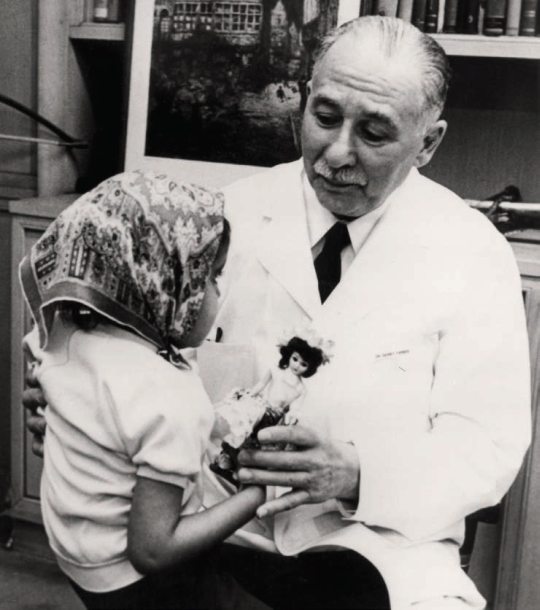
Sidney Farber

Dr. Sidney Farber

The nature of metastasis is much better understood today and a patient with gynecological cancer, such as myself, is routinely offered chemotherapy following surgery. Of course only in the past 40 or 50 years have powerful chemotherapy drugs been introduced to the arsenal in the war against cancer. Oncologist Sidney Farber (1903-1973) is considered by most historians to be the father of chemotherapy. Farber and his team in Boston began trials on children with leukemia in the late 1940s. At this time leukemia was still a death sentence for any child diagnosed with the disease.

Farber’s new therapy was almost miraculous in the sense that it led to remission in many of his young patients. Some of the children, including a patient named Robert Sandler, had their lives extended by months after the potent chemicals were administered to them. The leukemia would virtually disappear and they would momentarily resume an active childhood. Throughout the 1950s and 60s, Farber continued to make advances in cancer research, notably the 1955 discovery that the antibiotic actinomycin D and radiation therapy could produce remission in Wilms’ tumor, a pediatric cancer of the kidneys.

What the Future Holds

As I battle ovarian cancer I try to be realistic about how far treatment has come, I know there is still an extremely long way to go in the war against this insidious disease. Over the last two decades, the five-year survival rate for patients with ovarian cancer has improved significantly. Yet, according to the experts, no more than 30 per cent of long-term ovarian cancers are currently being cured. Oncologists admit that they are facing enormous challenges. While surgical advances and new treatment approvals, including Lynparza (olaparib) and Avastin (bevacizumab), have improved the outlook for ovarian cancer patients, late diagnosis and tumour resistance remain as the two most significant barriers in overcoming the disease.

Cancer Cells

Meanwhile, the medical community is continuously developing new treatments for cancer, one of the most promising is called immunotherapy. For decades oncologists have known that the immune system plays an important role in certain types of cancer. They noted that there were rare spontaneous remissions of cancer without treatment and they suspected that this was because the immune system was attacking the tumour. Immunotherapy is designed to boost the body’s natural defenses to fight the cancer. Medical specialists use materials either made by the body or in a laboratory to improve, target, or restore immune system function.

At the present time it isn’t entirely clear how immunotherapy works against cancer, it may function by stopping or slowing the growth of cancer cells, stopping cancer from spreading to other parts of the body, or helping the immune system increase its effectiveness at eliminating cancer cells. There are currently several types of immunotherapy in use, including monoclonal antibodies, non-specific immunotherapies, and cancer vaccines.