
A cancer patient’s age can influence their overall prognosis, but it’s also known to affect many diverse aspects of their cancer journey. I was just 46 when I was diagnosed with both uterine and ovarian cancer, however the median age of diagnosis in Canada is about 63. I now realize that age is one important factor in how the medical community perceives your risk.
Obviously my gynecologist was concerned when he diagnosed me with endometriosis and a medium sized mass on my right ovary. He wanted to perform surgery, but he still believed the likelihood was for my condition to be benign. About a week following my surgery, the pathology report ultimately revealed the presence of adenocarcinoma in both my uterus and ovary. Meanwhile, my gynecologist acknowledged that he was shocked because the disease is relatively infrequent in women under fifty.
On my first few visits to the cancer centre, I became even more acutely aware of my age and its implications. Now it was starting to feel like both a blessing and a curse, an advantage, and a disadvantage. A cancer diagnosis has the power to impact nearly every aspect of your life; you feel it physically, emotionally, socially, and financially. Studies have indicated that younger patients usually have a physical advantage, but they may possibly experience a disadvantage in the other areas.

When I attended my appointments with my oncologist at the Tom Baker Cancer Centre, I noticed that I was surrounded by women in my own fortysomething age range. However, many of them were not patients themselves, they were there most often as caregivers and were accompanying a cancer stricken elderly parent. Sometimes as I walked in with my support person, my healthy and totally independent 72-year-old mother, I would feel bitter and confused at our obvious role reversal.
Even so, a part of me remained grateful that I was younger than most patients. I was terrified because I realized that ovarian cancer has a dismal five-year survival rate, but at the same time I was also aware that a woman’s age plus the stage of her cancer are usually the two most significant factors in determining her prognosis. I quickly discovered that oncologists will perhaps approve different types of treatment depending on a patient’s age. They are sometimes able to approach cancer treatment more aggressively if, for example, a patient is 46 rather than 66.
Following my first examination at the Tom Baker Cancer Centre, my mother and I were ushered into one of the conference rooms to meet with my gynecologic oncologist, he had with him several junior doctors and residents. The seriousness of my situation began to register, as I looked across the table at four of five white-coated medical professionals. Suddenly I realized that my cancer care team had made a decision and they were going to go all in.
Sure enough, they explained that they wanted me to undergo surgery as soon as possible. This news was overwhelming, especially since I was still recovering from a total abdominal hysterectomy that I had undergone three weeks earlier. “I just had a hysterectomy and now I’m dying of cancer,” I tearfully blurted out. “You’re not dying, I’ll inform you if you are dying,” a firm voice immediately responded. These rational words jolted me back to reality, and before I left, I signed a consent form for a laparotomy—a specialized procedure in which abdominal organs are removed, biopsied or repaired and a definitive diagnosis can be made.
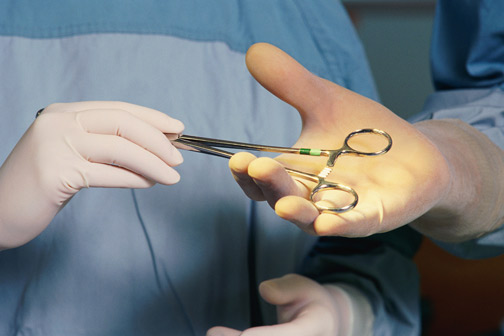
At our meeting my oncologist had been unambiguous that his treatment goal was a “cure” or full remission. Meanwhile, the most important thing I could do was to have faith— if the medical professionals believed I could become cancer free then this was an outcome worth striving for. For a year I endured what seemed like an endless hell of major abdominal surgeries and chemotherapy, at one point I even required additional surgery to repair a bowel obstruction. My treatments and hospitalizations were so rigorous that I don’t know if I could withstand them again now. Looking back a decade later, I now credit my relative youth as a major advantage in the agonizing struggle to destroy my cancer.
Even so, I continue to believe that I’m at a kind of messy middle range for cancer patients. In many instances, people in their forties or fifties experience the financial hardship or toxicity of a cancer diagnosis more severely. Those who are younger don’t have as many financial responsibilities and are usually able to rely on their parents or others for financial support. Obviously, most cancer patients in my age group are at the stage of their lives when they’re in the workforce and usually mid to late career. They’re not retired so they mourn the loss of income and the loss of social status if they must exit the workforce or take long-term leave.
Finally, I’ve observed a gap in psychosocial support for this age range. There are a fair number of young adult cancer support groups for patients under 35, and there is often specialized support designed for seniors over 65. Those of us who are middle-aged when cancer strikes tend to be left more on our own, especially when active treatment is finished, and we are considered cancer-free or in remission. As someone with first-hand experience I know that cancer survivorship is a lifelong journey that doesn’t stop when surgery or chemotherapy treatment is over.


 The Teal Diaries: An Ovarian Cancer Journey