I am devastated by the results of the 2024 U.S. presidential election; I’m gravely concerned about what a second Trump administration means for that country and our already turbulent world. I’m worried about the impact a Trump presidency will have on the sick, the disabled and the marginalized. As a survivor of ovarian cancer, my thoughts are especially with the cancer community.
If Trump is true to form, he’ll work tirelessly to achieve his detrimental campaign promises, his proposed policies would utterly decimate cancer research and health insurance coverage. I personally believe that basic healthcare should be a right rather than a privilege, maybe I’m radical that way—in that case, I’m proud to be extreme. If thinking that getting cancer shouldn’t be a leading cause of bankruptcy makes me a woke leftist, then so be it.
Long before the COVID-19 pandemic, Robert F. Kennedy Jr. was building up a following with his anti-vaccine nonprofit group, Children’s Health Defense, and becoming one of the world’s most influential spreaders of fear and distrust around vaccines. Now, President-elect Donald Trump has chosen Kennedy to lead the Department of Health and Human Services, which regulates vaccines. Experts warn of what’s to come now that Kennedy has been placed in control, it’s especially worrying for children, the elderly and cancer patients.
Whenever I think about the American people choosing Donald Trump to lead them for the second time, a poem that I know immediately comes to mind. In 2007, Beat poet Lawrence Ferlinghetti wrote the poem Pity the Nation. He was inspired by Kahlil Gibran’s poem of the same title first published in 1933. Ferlinghetti wrote his version of Pity the Nation when he was 88. Putting pen to paper near the end of George W. Bush’s presidency, he saw much to protest and had a loud voice amongst the literary left.
Pity the nation whose people are sheep And whose shepherds mislead them Pity the nation whose leaders are liars Whose sages are silenced and whose bigots haunt the airways Pity the nation that raises not its voice but aims to rule the world by force and by torture And knows No other language but its own Pity the nation whose breath is money and sleeps the sleep of the too well fed Pity the nation Oh pity the people of my country My country, tears of thee Sweet land of liberty!
In my opinion living with cancer is one of the most difficult and brutal things that any person will ever have to face, to have cancer is to live moment by moment and it’s not always easy for us to look toward the future. Still, I feel I’m in a better situation than many because I’ve been in remission for eleven years. My long remission and the fact that my city, Calgary, Alberta, intends to open a new state-of-the-art cancer centre this year has me facing the New Year with hope and optimism.
The Arthur J.E. Child Comprehensive Cancer Centre
At some point in 2024 I’ll witness the grand opening of Canada’s largest and newest comprehensive cancer centre! I experienced how desperately we needed a new cancer centre when I was going through treatment. Our city’s existing Tom Baker Centre has been serving men and women diagnosed with cancer for approximately two generations now; it opened its doors over 40 years ago in the early 1980s. At the time, Albertan’s marveled at the spacious and innovative new facility. The building had been meticulously designed to provide cancer care for Calgary’s population and the rest of southern Alberta. Although the Baker Centre’s first doctors once pondered how exactly they’d fill all the new space available to them, I saw the present day oncologists, nurses and technicians grapple with cramped offices, crowded reception areas and patients lining the hallways waiting for treatment.
An artist’s rendering of Calgary’s new Arthur Child Cancer Centre
When it opens later this year, it’s promised that the new Arthur J.E. Child Comprehensive Cancer Centre will engage patients as the focus of a multidisciplinary health system, we will have access to comprehensive cancer care services in a state-of-the-art facility. In fact, the extensive scope and integration of cancer care services at Calgary’s new hospital will make it one of the most comprehensive cancer centres in the world. Operationally, the Arthur Child will include both inpatient and outpatient services. Services based on clinical priorities are to include:
more than 100 patient exam rooms
160 inpatient unit beds
more than 100 chemotherapy chairs
increased space for clinical trials
12 radiation vaults, with three more shelled in for future growth
new on-site underground parking with 1,650 stalls.
numerous outpatient cancer clinics
clinical and operational support services and research laboratories
Important Oncology Breakthroughs
There’s no doubt that COVID-19 caused a huge backlog in cancer diagnosis and treatment. However, there is still plenty of positive news. Despite the recent global pandemic, medical advances are still accelerating the battle against cancer. Here are a few of the exciting recent developments in the field of oncology!
The seven-minute cancer treatment
The National Health Service (NHS) in England is to be the first in the world to make use of a cancer treatment injection. It takes just seven minutes to administer, rather than the current time of up to an hour to have the same drug via intravenous infusion. This will not only speed up the treatment process for patients, but also free up time for medical professionals. The drug, Atezolizumab or Tecentriq, treats cancers including lung and breast, and it’s expected most of the 3,600 NHS patients in England currently receiving it intravenously will now switch to the new injection.
Precision oncology
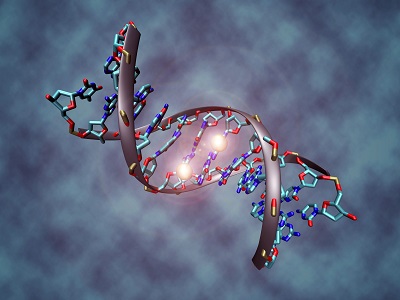
Precision oncology, defined as molecular profiling of tumors to identify targetable alterations, is rapidly developing and has entered the mainstream of clinical practice. Precision oncology involves studying the genetic makeup and molecular characteristics of cancer tumours in individual patients. The precision oncology approach identifies changes in cells that might be causing the cancer to grow and spread. Personalized treatments can then be developed. Because precision oncology treatments are targeted – as opposed to general treatments like chemotherapy – it can mean less harm to healthy cells and fewer side effects as a result.
Liquid and synthetic biopsies
Biopsies are the main way doctors diagnose cancer – but the process is invasive and involves removing a section of tissue from the body, sometimes surgically, so it can be examined in a laboratory. Liquid biopsies are an easier and less invasive solution where blood samples can be tested for signs of cancer. Synthetic biopsies are another innovation that can force cancer cells to reveal themselves during the earliest stages of the disease.
Car-T-cell therapy
A treatment that makes immune cells hunt down and kill cancer cells was recently declared a success for leukaemia patients. The treatment, called CAR-T-cell therapy, involves removing and genetically altering immune cells, called T cells, from cancer patients. The altered cells then produce proteins called chimeric antigen receptors (CARs). These recognize and can destroy cancer cells. In the journalNature, scientists at the University of Pennsylvania announced thattwo of the first people treated with Car-T-cell therapy were still in remission 12 years on.
Like every Christmas since my cancer diagnosis, this one will be unlike the ones I celebrated before I became a cancer survivor, A major cancer diagnosis often causes you to view the world differently—things that once seemed enormously important during the Christmas season lose significance and become almost trivial. Personally, I’ve discovered that having elaborate decorations, expensive gifts or wearing designer winter fashions all matter less to me now. These things frequently seem to fade into irrelevance as I confront a life-threatening illness. Meanwhile, my relationships with other people, discovering ways that I can make a difference in the world and learning more about the essence of who I am are at the forefront of my agenda and have an extremely high priority to me during the holidays.
Many cancer survivors will attest to the fact that there are times during the season when they are surrounded by people and still feel very alone. This type of emotional isolation occurs when you discover that you can no longer relate to people in the same way you did before. Things that were important to you in the past are no longer important to you, and your friends and family don’t understand why you have changed so much. I’ve noticed that the books I read, the movies or television that I watch and the activities that I like to participate in have all changed a fair amount since my cancer diagnosis, so have the topics that I prefer to discuss. This transformation has affected my personal relationships and how I feel about those closest to me.
Since my ovarian cancer diagnosis eight years ago, I’ve been required to think about my mortality. I’ve also had to tend to many practical matters that I didn’t anticipate that I’d have to deal with until I was much older. While everyone around me carries on with their lives, I’ve had to stop and reflect on some of the more profound questions that others have the luxury of ignoring. Individuals diagnosed with cancer suddenly find themselves contemplating existential questions. Why am I here? What is the purpose of my life? Who am I? These issues are brought to the forefront of your mind when facing a potentially deadly disease. During the holidays I sometimes feel frustrated because most things my friends and family care about seem fairly trivial to me now. For example, they got cut off in traffic on the way to one of their annual Christmas parties or the latest popular gadget for someone on their Christmas list is currently out of stock.
I still enjoy traditions like exchanging gifts, and most Christmases I’m able to partake in a delicious turkey dinner. However, it’s the small things that matter most as I savour each moment. Every year I make a Christmas list that I share with family members, but the items on my list are usually inexpensive things that are intended to make my daily life as a cancer survivor more pleasurable. The grand total is almost always less than two hundred dollars. It may sound trite, but I carry within my heart a list of things that can’t be bought or wrapped up in a box. If I wrote them down, my Christmas list would read like a combination of a bucket list and some of the hopes and dreams that I have for all women living with ovarian cancer.
Of course, the best Christmas gift that every current and future ovarian cancer patient could receive is a cure. But in the meantime, we need newer and better treatments as well as ways of preventing the disease or detecting it sooner. The survival rate for ovarian cancer remains dismal compared with most other types of cancer, this is essentially because the majority of women aren’t diagnosed until the disease is advanced and has spread beyond their reproductive organs. There is no reliable screening test for ovarian cancer and the symptoms are often vague. One common misperception is that a Pap Test for cervical cancer can also detect the presence of ovarian cancer, it definitely cannot.
I strongly urge anyone who would like to make a difference in the fight against ovarian cancer to make a donation to research this holiday season. Fortunately, women whose lives have been affected by this terrible disease have a number of non-profit advocacy groups working diligently for us. For Canadian citizens or those residing in Canada I recommend donating to Ovarian Cancer Canada OCC. For American citizens or those living in the United States I recommend donating to the Ovarian Cancer Research Alliance OCRA.
One of the most stunning realizations that I’ve had since being diagnosed with cancer is how much cancer impacts the whole person—the disease can undermine almost every aspect of a person’s life. The field of oncology acknowledges this, at least more than it did four decades ago when my grandmother survived her breast cancer diagnosis. Today most cancer patients, including myself, have access to social workers, psychologists, dieticians and other skilled professionals. Treating the whole person and recognizing that each patient has unique issues and needs have become firmly entrenched and are part of the philosophy of cancer care.
At my cancer centre there are now two forms that patients are asked to fill out at every checkup. The first contains questions to gage a patient’s physical wellbeing as they go thorough treatment, but a second questionnaire was recently added. This latest form is used to gather information about the various psychosocial issues that are associated with cancer. Certain social, financial or mental health issues may need to be addressed. While I sometimes resent having to answer what I consider highly personal questions, I realize the importance of asking cancer patients about almost every aspect of their lives.
Research Breakthroughs
Dr. Barbara Vanderhyden, one of Canada’s preeminent ovarian cancer researchers, recalls that when she began her work she was one of the only people in Canada researching the disease. Over a decade ago Vanderhyden started the Canadian Conference on Ovarian Cancer Research and now the community has grown from three people to more than 60 ovarian cancer researchers across the country. This flourishing research community has led to a number of recent discoveries. For instance, it is now known that ovarian cancer is not one disease but a spectrum of diseases with different responses to treatment.
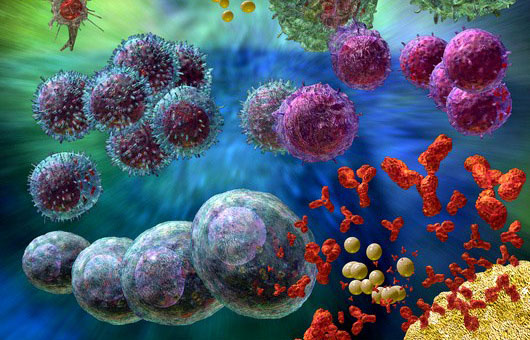
I’m frequently amazed at the lightening speed at which new cancer treatments are being discovered and implemented. For example, immunotherapy is an emerging approach to treatment that boosts the immune response to cancer. It enables the body to target and destroy cancer cells. There are three main areas of immunotherapy that are showing promise.
Vaccines that enhance immune system response
Inhibitors that affect how the immune system regulates itself
Adoptive T-cell transfer, which removes a patient’s cancer-fighting T-cells and activates them before returning them to the bloodstream
Although gynecological cancers, such as mine, have seen only modest breakthroughs in immunotherapy, melanoma and lung cancer are areas that are witnessing great progress.
New Targeted Treatments
According to many scientists a new era of cancer treatment is beginning in which patients get drugs matched specifically to their tumour. Patients experience longer survival and fewer toxic effects through this approach, which is being made possible by advances in genetic profiling of the tumour itself. Conventional chemotherapy and radiation treatments have both short-term and long-term side effects and can be absolutely brutal for patients to endure. These treatments kill a significant number of healthy cells in addition to the cancer cells. “At the moment it’s more like using a cannonball to kill an ant – and creating a whole lot of damage at the same time,” explains professor Roy Herbst, chief of medical oncology at Yale Cancer Centre.
Meanwhile a UK trial, called Optima, is being run by University College London and Cambridge University and funded by Cancer Research UK. Beginning this summer, it will recruit 4,500 women with breast cancer. The women’s tumours will be genetically tested as soon as they are diagnosed to establish which will respond to chemotherapy and which will not. Of the 50,000 or so women diagnosed with breast cancer in the UK each year, about 40 per cent, or 20,000, are currently given chemotherapy but only half of them do well as a result of it; in the other half, the benefit is unclear. The researchers hope to find out which of the latter group actually need chemotherapy. As one oncologist emphasized: “In some ways it is simple – it means that you can make sure you are giving the right drug to the right person at the right time. In others it is very complex, because there are so many pieces to the jigsaw. We need to put the puzzle together.”




 The Teal Diaries: An Ovarian Cancer Journey