I am devastated by the results of the 2024 U.S. presidential election; I’m gravely concerned about what a second Trump administration means for that country and our already turbulent world. I’m worried about the impact a Trump presidency will have on the sick, the disabled and the marginalized. As a survivor of ovarian cancer, my thoughts are especially with the cancer community.
If Trump is true to form, he’ll work tirelessly to achieve his detrimental campaign promises, his proposed policies would utterly decimate cancer research and health insurance coverage. I personally believe that basic healthcare should be a right rather than a privilege, maybe I’m radical that way—in that case, I’m proud to be extreme. If thinking that getting cancer shouldn’t be a leading cause of bankruptcy makes me a woke leftist, then so be it.
Long before the COVID-19 pandemic, Robert F. Kennedy Jr. was building up a following with his anti-vaccine nonprofit group, Children’s Health Defense, and becoming one of the world’s most influential spreaders of fear and distrust around vaccines. Now, President-elect Donald Trump has chosen Kennedy to lead the Department of Health and Human Services, which regulates vaccines. Experts warn of what’s to come now that Kennedy has been placed in control, it’s especially worrying for children, the elderly and cancer patients.
Whenever I think about the American people choosing Donald Trump to lead them for the second time, a poem that I know immediately comes to mind. In 2007, Beat poet Lawrence Ferlinghetti wrote the poem Pity the Nation. He was inspired by Kahlil Gibran’s poem of the same title first published in 1933. Ferlinghetti wrote his version of Pity the Nation when he was 88. Putting pen to paper near the end of George W. Bush’s presidency, he saw much to protest and had a loud voice amongst the literary left.
Pity the nation whose people are sheep And whose shepherds mislead them Pity the nation whose leaders are liars Whose sages are silenced and whose bigots haunt the airways Pity the nation that raises not its voice but aims to rule the world by force and by torture And knows No other language but its own Pity the nation whose breath is money and sleeps the sleep of the too well fed Pity the nation Oh pity the people of my country My country, tears of thee Sweet land of liberty!
For cancer patients in Alberta, and indeed for the entire cancer community, there’s a looming sense of dread—a feeling that the status quo is unsustainable and the system that provides care to us could soon collapse.
The backlog of patients, due for the most part to the province’s shortage of oncologists, has become increasingly dire. An internal report that was presented to Alberta Health Services this May found that the number of new cancer referrals grew by 18 per cent between 2018 and 2023. Furthermore, the report revealed the number of patients seen outside the Alberta Health four-week target jumped by nearly 70 per cent over the last five years.
As the number of new cancer patients continues to outpace the number of new oncologists in the province, wait times are going up. Five years ago, patients requiring medical oncology care waited an average of 6.3 weeks for their first consult. In the first quarter of this year, the average wait time for it was 10.3 weeks. There have been several cases recently of Alberta patients dying before they could be formally assessed by a medical oncologist or start a treatment plan.
Steven Wong of Edmonton died in mid-July, leaving his wife without her husband, their three young boys without their father and a family without faith in Alberta’s health care system. Not once did Wong or his wife, Cici Nguyen, see or speak to a medical oncologist — doctors who specialize in the diagnosis and treatment of cancer — before his death.
The new Arthur J.E.Child Comprehensive Cancer Centre in Calgary sits unused and is scheduled to open later this year. With a shortage of cancer specialists the magnificent building alone may not be enough.
Athletic at age 41, Wong was a project manager for a real estate investment company and busy dad of three — he was a non-smoker and non-drinker and was healthy, as far as he knew. However, earlier this year a diagnosis of gastric cancer changed everything. An ER visit’s endoscopy had shocking news. It found a large stomach tumour. Wong’s tumour took him from heartburn to “inoperable” in just weeks. Referrals to the Cross Cancer Institute timed out as complications set in. Gastric bleeding. Perforation. A collapsed lung. Infection.
The stark reality is that Alberta has an excellent system of cancer care, but it’s functioning with tremendously limited resources. With resources as scare and labour intensive as they are, the triage of oncology is the tyranny of the healthiest, the earliest diagnosed, with priority going to the ones most likely to benefit in a life-saving way. Wong’s cancer was advanced, and almost surely not curable.
CiCi Nguyen is certain her husband would have died with, or without, the timely help of a medical oncologist. But she insists it’s just not right Alberta’s medical system failed to give Steven Wong the opportunity to prolong his life. “We never heard from the actual oncologist themselves or anyone from the Cross Cancer Institute explaining to us why we couldn’t see somebody,” said Nguyen. “He didn’t deserve the way he was treated at the end.”
As with many cancer survivors and cancer care specialists, I’m furious as well as demoralized— with much of my growing frustration directed at our provincial government. A report presented to Alberta Health Services CEO Athana Mentzelopoulos from Cancer Care Alberta confirmed a widening gap between cancer referral and cancer treatment in the province since the UCP government took power. Waits for oncology and treatment have surged over the past seven years, while the number of new cancer patients has significantly increased.
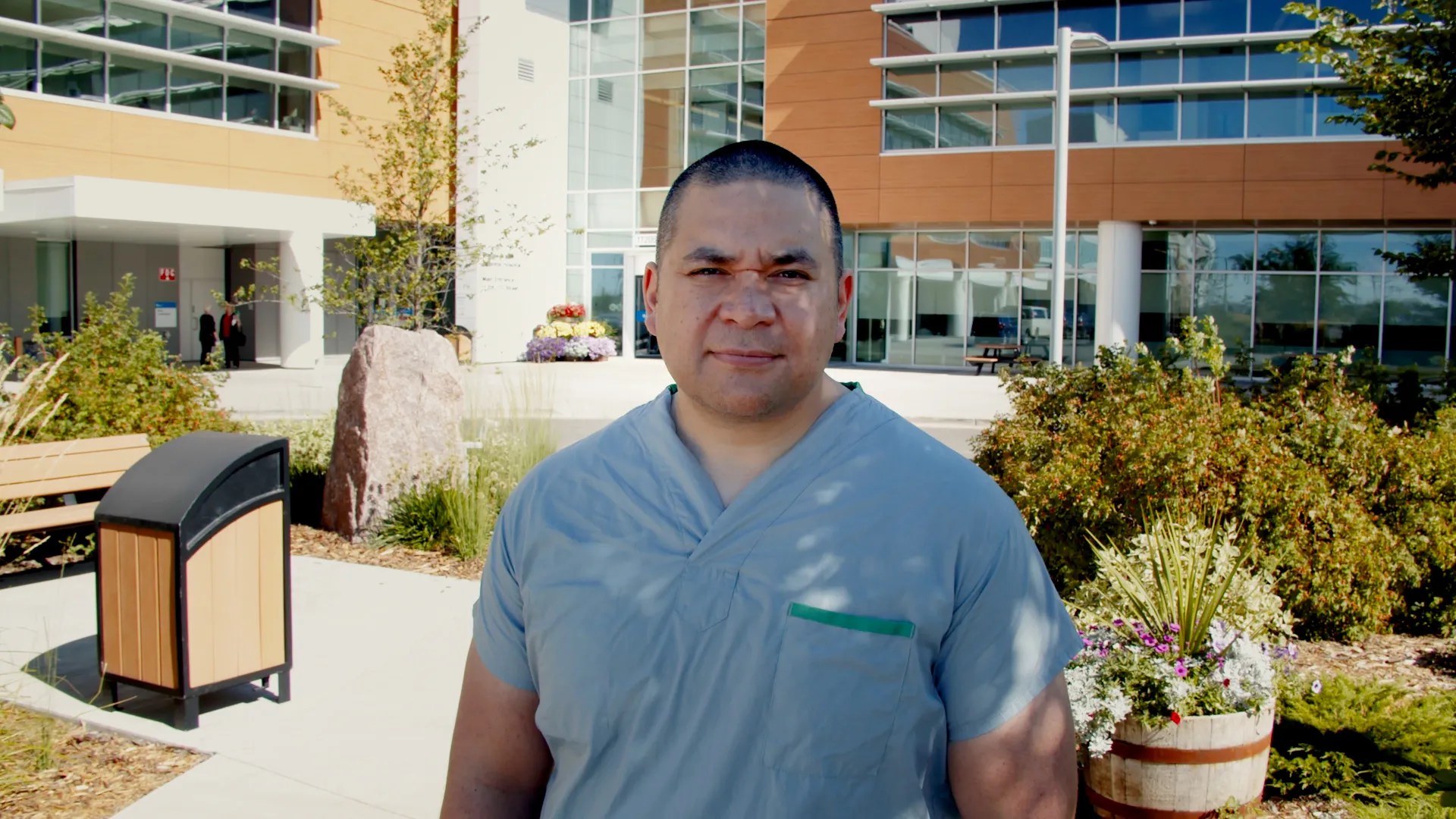
Dr. Alika Lafontaine, a former president of the Canadian Medical Association, has voiced his concerns regarding healthcare in Alberta.
The Cancer Care Alberta study points to several major factors affecting Alberta’s capacity for cancer treatment, one is that as medical science has advanced there is a growing complexity and chronicity of cancer care. However, the other factors cited are largely the responsibility of the provincial government, under their control is workforce and manpower as well as capital infrastructure and equipment.
The report’s author, Dr. Dean Ruether, medical director of community oncology in Alberta, said the province continues to struggle with wait times that are unacceptable and getting worse. “Physicians continue to advocate for their patients, express concerns over the delays in getting patients into our system and to treatment and are sharing their own distress at watching this problem grow,” he stated. Of course, patient complaints about delays are increasing, many are expressing their outrage to oncologists, to Alberta Health and the health ministry,
I wasn’t surprised when Dr. Alika Lafontaine, a former president of the Canadian Medical Association, took to social medica to stress just how serious the overall healthcare crisis has become. “As a rural specialist who has been in Northern Alberta for the past 12 years, I can compare the state of healthcare today with rural healthcare when I first arrived here,” he wrote.
“Capacity just wasn’t an issue in 2011. If an emergency came in, we handled it. There was no triaging of resources or placing patients in doom loops where they cycled round and round as they were promised care but never received it. It is clear we do not have enough skilled providers in the health system to accommodate demand. If more professionals leave to other places—private insurance, private care, another province, the US, or leave medicine entirely—health access will disappear.”
As a cancer survivor, who may face a recurrence at some point, I’m worried and outraged as I observe the looming cancer care crisis in Alberta. The Alberta Medical Association is warning that if the provincial government doesn’t take appropriate action soon, more patients will face delayed treatment or even die unnecessarily.
In a recent interview AMA president Dr. Paul Parks emphasized that wait times in the province have increased, delaying treatment. “Sometimes cancers that could have been curable are no longer curable because of the delays” he said. “They are seeing cases and examples where, because of delays cancers that were localized and easily treatable initially sometimes spread and it becomes not curable, and ultimately some people are succumbing because of delays and that’s why we’re raising the alarm.”
Worst of all, the Alberta government doesn’t appear to be listening to the urgent pleas of health care professionals or patients. I’m disheartened by Alberta’s UCP government and their attitude. In my opinion there is an appalling lack of compassion or empathy that’s being demonstrated. Two years ago, before she was our provincial leader, premier Danielle Smith made a shocking comment in which she essentially blamed cancer patients for their condition.
Smith’s now infamous comment was made during a podcast with naturopathic doctor Dr. Christine Perkins. The two were discussing healthcare and their shared belief that there’s a need for both mainstream and naturopathic medicines.
“Once you’ve arrived and got stage four cancer and there’s radiation and surgery and chemotherapy, that is incredibly expensive intervention — not just for the system, but also expensive in the toll it takes on the body,” said Smith. “But, when you think everything that built up before you got to stage four and that diagnosis, that’s completely within your control and there’s something you can do about that that is different.”
It’s evident that the ideology of our premier and her government regarding healthcare and cancer treatment only compound the serious problems we’re already facing. To me this is completely unacceptable. In the case of cancer care, delays of even a few weeks can limit the range of treatment options. A patient who might have been a candidate for an exciting new treatment that could cure the disease may no longer be eligible. Instead, they face longer treatments, poorer outcomes or, even worse, may only be palliative.
The reasons for the crisis in cancer care are complex and they aren’t being adequately addressed by those in power. One cause behind the crisis can be explained through simple math, demand is outpacing supply. Official statistics indicate that cancer rates in the province are outpacing population growth. Alberta’s population is increasing rapidly, and more patients equal a need for more care. Alberta’s population is also aging, and older patients have a much higher incidence of cancer.
Another important concern is that oncology is always evolving. Advancement in the field of oncology and better cancer treatment are things to strive for, but it can sometimes present a paradox. For example, technological innovation like genomic therapy can now save patients who would not have survived short years ago. This is wonderful news, but it adds a new population of complex patients who need special care after treatment, often over a period of years.
According to the AMA there are several issues that must be addressed related to cancer care. First, Albertans are facing reduced access to family doctors or generalist care. Too many patients at risk of cancer lack a family doctor or a consistent primary care provider. Add to this the pandemic disruption to screening and preventive measures. Today patients show up in emergency departments with advanced cancers that could have been detected and treated earlier. The number of new cancers being diagnosed in overcrowded emergency departments, which are simply not resourced for this type of care, has never been higher.
Furthermore, the organization overseeing Alberta’s doctors says the government is failing in its obligation to both recruit and retain oncologists There’s an urgent need for more oncologists as we face a severe shortage. Alberta has approximately the same number of cancer specialists in the province as we did 10 years ago, and the system is now experiencing acute strain.
All oncologists in Alberta are employees or contractors, meaning there can be no recruitment if spaces are not established first by the funder. An oncologist cannot just decide to move to Alberta and a community cannot simply hire one. Unfortunately, despite the increasing need, new oncology positions have not been created to keep pace. Calgary is supposed to open a new state-of-the-art cancer centre this fall. But I worry that if it opens on schedule The Arthur Child Cancer Centre might lack enough specialists to provide premium care to patients.
Obviously, our province must do everything it can to hang on to the oncologists we have today. Then, assuming more spaces become available, we must begin to recruit. The AMA says we need to deal with the problem that Alberta is not currently competitive with other provinces in retaining or attracting oncologists. We have fallen behind. Few new Alberta-trained graduate oncologists have stayed in the province in recent years. Meanwhile, other provinces like BC and Ontario are actively hiring as many cancer specialists as they can. The Royal College of Physicians and Surgeons of Canada will produce only 25 new oncologists for all of Canada this year. Alberta alone could use two-to-three times that many today.





 The Teal Diaries: An Ovarian Cancer Journey