Healing Through Words: CanLit and Cancer

In my recent blog post Reading Through Cancer, I underscored the importance of books and literature and how these have helped me to cope with my cancer diagnosis. In this post I’d like to celebrate literature that is Canadian, or CanLit for short. I like it when this genre is defined simply: “CanLit is writing by people connected to this country (Canada), by birth or residence, and a dialogue between author and reader.” In my case I think the relationship I have to my country’s literature is quite complex, I’m a Canadian, a woman and a cancer patient. My personal interpretation of Canada’s books and authors is uniquely shaped by all three of these viewpoints.

I found a wonderful example of this fusion recently when I was reading Scars & Stars, a book of poetry by Canadian author Jesse Thistle. Jesse Thistle is Métis-Cree from Prince Albert, Saskatchewan, he’s the author of one autobiographical book, From the Ashes, in addition to his published collection of poems. In both, Thistle writes about his struggles, particularly his battle with addiction. He candidly depicts his past life, often giving vivid details about his existence on the streets and in prison. 

While I’ve never lived in homeless shelters and cannot fully view the world from an Aboriginal man’s perspective, there are still certain aspects of Thistle’s writing that resonate with who I am and what I’ve experienced. I know what it’s like to have cancer, to be relatively poor and to be a middle-aged woman. When he writes about being extremely sick or in physical pain, I can relate to his suffering. When he writes about feeling invisible, ignored or being on the margins of society, I’m connected to that on some level as well.

One poem from Scars and Stars that had an extraordinary impact on me when I read it is called Oncology Ward, it focusses on Thistle’s bedside visit to his grandmother when she was dying of cancer. At the time he was on strict probation and living in a rehabilitation centre or halfway house. The visit was difficult to arrange, but Thistle knew that it was probably the last chance he would get to go see his grandmother, the woman who had raised him. With the assistance of a friend the barriers were surmounted and he was taken, one final time, to see her.


Oncology Ward 

I sit on your deathbed, Grandmother.
You’re gaunt
with eyes sunken in
hollow cheeks
orbital and mandible bones sticking out
as you chew your food.

You don’t look as well now,
at the end of winter’s season.
That eternal sun that lit up your youth
has set behind old age.

Your hospital gown hangs
like wind-torn sea sails
strewn across storm-broken masts.

But there’s defiance left in you,
a glowing ember
a spark
a flicker
a flame.

“Have courage, dear grandson,” you said, your eyes
meeting mine,
“we’ll beat this cancer yet.”

Many years after it took you,
a part of me still thinks you can beat it.
A part of me knows that you did.

Jesse Thistle


That last visit to speak to his grandmother on the oncology ward was one of the most important moments of Jesse Thistle’s life. It was then that he promised his grandmother that he would return to school and get a post-secondary education. He promised her that he would turn his life around. Looking back, he says that one heartfelt pledge that he made has guided him in all his current success, through all the peaks and valleys of rebuilding his life. Today Jesse Thistle is a husband and father, as well as an assistant professor of humanities at York University in Toronto.

Reading Through Cancer

Photo by Ivo Rainha

With a bustling holiday season and another long winter both nearly upon us, I’ve decided to devote this post to the theme of literature and reading. For me books are like wonderful companions that help me through the dark, cold months. In addition, I often enjoy giving them as gifts to some of the people who are closest to me. 

While I’ve always loved reading, I never expected how much this passion would guide me through my cancer journey. In times of crisis books have helped me to feel more connected to other cancer survivors and to other human beings in general. The American literary icon James Baldwin put his feelings this way.

“You think your pain and your heartbreak are unprecedented in the history of the world, but then you read. It was books that taught me that the things that tormented me most were the very things that connected me with all the people who were alive, who had ever been alive.” 

Here are a few of the books (both fiction and nonfiction) that have helped sustain me when I felt the fear, uncertainty or loneliness of living with an ovarian cancer diagnosis.

Full Catastrophe Living by Jon Kabat-Zinn

Originally published in 1990, this book has been through numerous editions, the author explores the role of mindfulness and how its practice can improve the quality of life for people with chronic illnesses. Jon Kabat-Zinn describes in detail the techniques he has used successfully with patients in the Stress Reduction Clinic at the University of Massachusetts Medical Centre. Learning to listen to your own body is vital, above all I came away from this book with an improved awareness of how my body responds to the emotional and psychological stress of having cancer. I’ve also acquired new methods to effectively reduce or manage the negative impact of such everyday stress.

Full Catastrophe Living is over 400 pages and covers a lot of territory, including the basics of both meditation and yoga. I can accept that some readers might be turned off by the length of this volume or by its allusions to certain tenants of Buddhism. Mindfulness mediation is frequently taught and practiced within the context of Buddhism, however it has been argued that its essence is universal. For this reason, it can be learned and practiced by cancer patients without appealing to Asian culture or Buddhist authority to enrich it or authenticate it. Advocates contend that mindfulness stands on its own as a powerful vehicle for self-understanding and healing.

When Breath Becomes Air by Paul Kalanithi 

I highly recommend reading Paul Kalanithi’s bestseller, When Breath Becomes Air, especially if you’re dealing with a cancer diagnosis. At the age of 36, on the verge of completing a decade’s training as a neurosurgeon, Kalanithi was diagnosed with inoperable lung cancer. One day he was a doctor treating the dying, the next he was a patient struggling to live. When Breath Becomes Air is a life-affirming reflection on facing our mortality and on the relationship between doctor and patient. I was often mesmerized by the author’s writing skills, almost a little envious that he could be both a talented physician and such an outstanding creator of non-fiction. There are passages in the book where Kalanithi perfectly captures what it’s like to suddenly be living with cancer.

“In a way though, the certainty of death was easier than this uncertain life. The path forward would seem obvious if only I knew how many months or years I had left. Tell me three months, I’d spend time with family. Tell me one year, I’d have a plan (write the book). Give me 10 years, I’d get back to treating diseases. The pedestrian truth that you live one day at a time didn’t help. What was I supposed to do with that day?”

Paul Kalanithi When Breath Becomes Air

The Emperor of All Maladies by Siddhartha Mukherjee 

After my cancer diagnosis I started to think quite a lot about the history of cancer, I realize that I owe my life to the oncologists and patients that have come before me. I developed an even greater fascination this topic while watching the PBS miniseries Cancer: The Emperor of All Maladies. The creators of this ground-breaking television documentary based their project on a work of non-fiction by renowned oncologist and award-winning journalist Siddhartha Mukherjee. Both the PBS documentary and Mukherjee’s Pulitzer Prize winning volume have one overriding theme. They bring to light that our current generation’s experience with cancer represents only a momentary chapter in an epic battle spanning thousands of years.

Maya Angelou The Complete Collected Poems

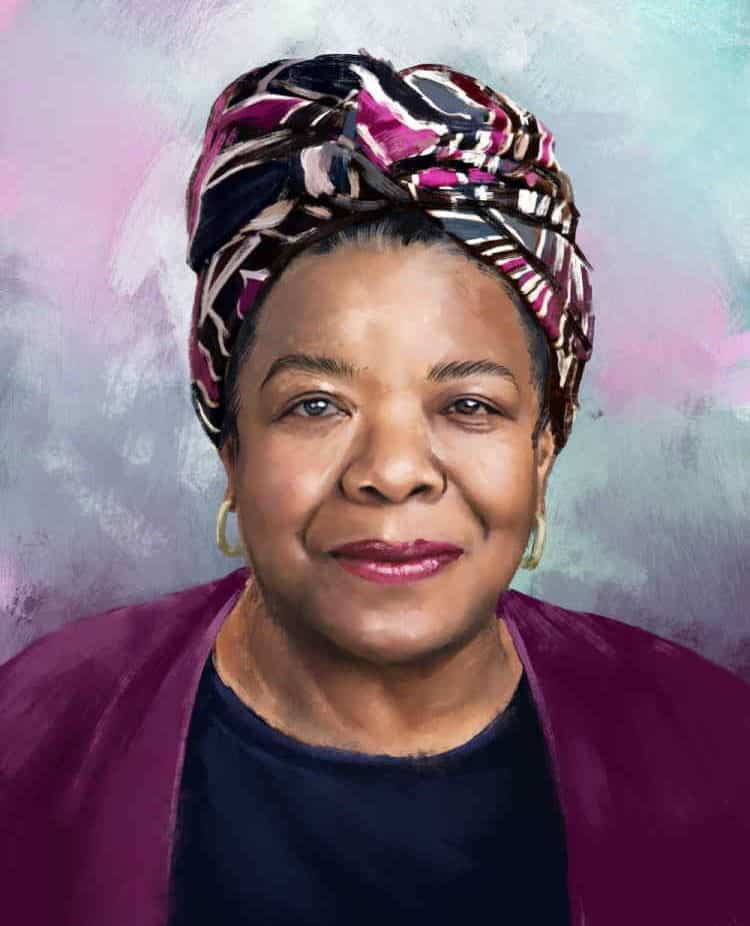
Maya Angelou (1928-2014) was an American author, screenwriter, poet and civil rights activist. I’ve always been an avid fan of her literature, now that I’m a cancer survivor I often find strength and inspiration through her words. During my stay on the cancer ward I kept a copy of Angelou’s complete poems by my bedside. My favourites include Still I Rise and Phenomenal Woman, at the lowest point in my life I would read passages whenever I was able to sit up in bed.

You may shoot me with your words,
You may cut me with your eyes,
You may kill me with your hatefulness,
But still, like air, I’ll rise.


Pretty women wonder where my secret lies.
I’m not cute or built to suit a fashion model’s size   
But when I start to tell them,
They think I’m telling lies.
I say,
It’s in the reach of my arms,
The span of my hips,   
The stride of my step,   
The curl of my lips.   
I’m a woman
Phenomenally.
Phenomenal woman,   
That’s me.